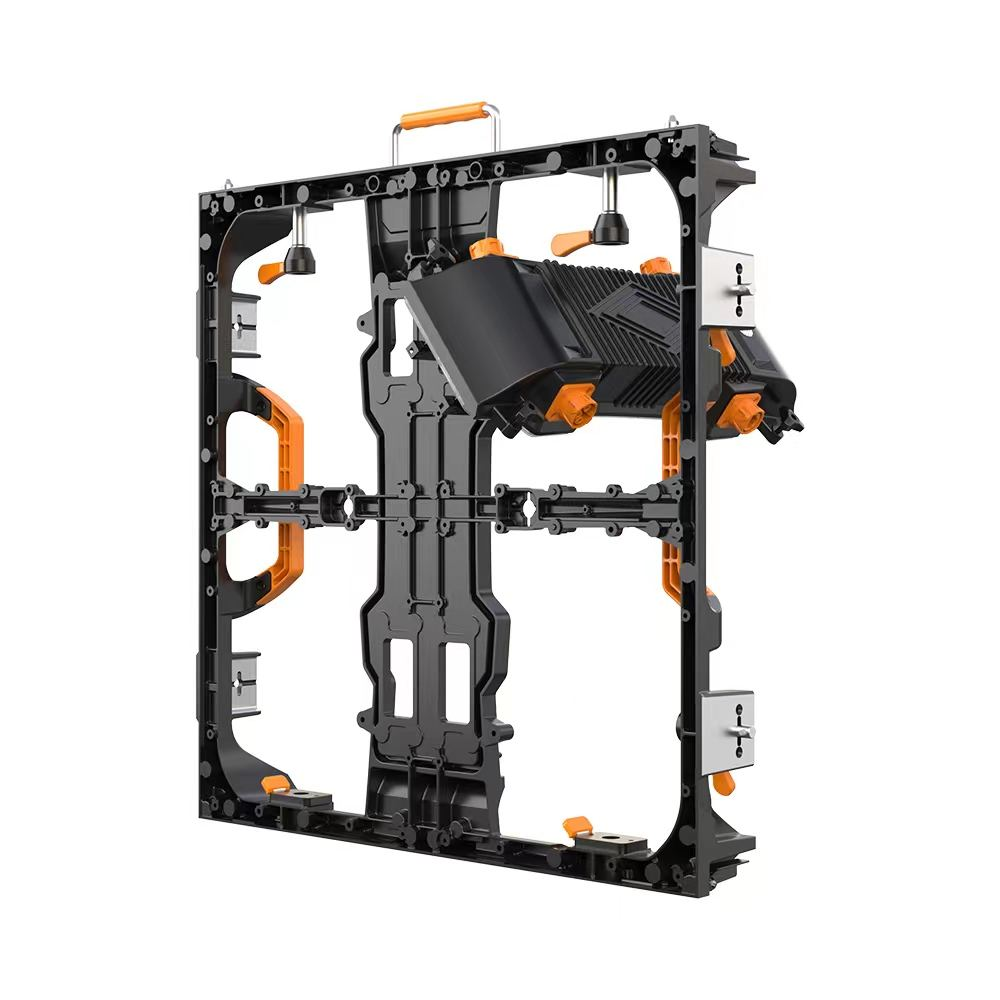
LED display condensation risk should be checked before normal startup when cold equipment enters warmer, humid surroundings. Confirm the manufacturer’s transport, storage and operating conditions, allow the equipment to adapt using its approved procedure, and release it for operation only when the required checks are satisfied. Room temperature, an elapsed waiting period or a dry-looking front face alone is not a complete readiness record.
For buyers, rental teams and integrators, the practical decision is whether transported or cooled equipment can enter normal service without an unresolved moisture concern. This guide explains what to document, which conditions to distinguish, and who should authorize startup. It is a planning and handover framework, not a universal drying recipe, a substitute for electrical safety procedures or evidence of a completed KSS installation.
Why a warm room can still leave a cold display at risk
Condensation is different from rain entering a cabinet. Moisture in surrounding air can form liquid on a sufficiently cold surface. A shipment arriving from cold storage may therefore face a different risk after it reaches a warmer building, even if it was not visibly exposed to rain during delivery.
Vaisala’s explanation of dew point temperature describes the temperature at which air becomes saturated and uses a cooled metal surface to explain condensation. The relevant comparison is between the surface temperature and the dew point of the air around it. Ambient temperature by itself does not describe that relationship.
For an LED project, identify the temperature transition and the air that can reach the equipment. The room may already be warm while transported metalwork or components have not yet reached the required condition. Record the transition instead of assuming that all parts immediately follow the room thermostat.
Treat this as a reason to investigate, not a diagnosis from a weather forecast. The presence, location and extent of moisture require appropriate inspection and measurements. A reported relative humidity at an airport, warehouse or nearby weather station is not automatically representative of the installed cabinet or control-equipment enclosure.
For rental LED display projects, include the transport-to-venue transition in the setup schedule. A short access window should not silently remove a manufacturer-required environmental check from the commissioning scope.
Read “non-condensing” alongside the temperature and humidity limits
Gather the current documentation for the actual cabinets, modules, power equipment, player and controller. Record storage and operating conditions separately. A specification that permits cold storage does not necessarily authorize normal operation immediately after transport, nor does one component’s limit define the entire system’s allowable environment.
As a model-specific example, NovaStar’s TB50 specifications, version 1.2.2, list 0% RH to 80% RH with a non-condensing qualification for the player, alongside separate storage and operating temperatures. The qualification matters: a numerical humidity range should not be read as permission for liquid moisture to be present. These are TB50 conditions, not specifications for every KSS display or every controller.
Ask the supplier to identify the installation and startup instructions that apply after a cold-to-warm move. Include any minimum waiting period, required observations, environmental conditioning and restrictions on unpacking or powering equipment. Where instructions are incomplete, request written clarification rather than filling the gap with a rule copied from another product.
Keep environmental protection labels and readiness evidence separate. A supplier may describe an outdoor-rated cabinet while its control equipment has different requirements. Ask which components and interfaces are covered, where each item will be located, and which conditions apply at startup. Do not use one rating or marketing label to waive the rest of the system’s instructions.
Hold equipment in an approved staging area
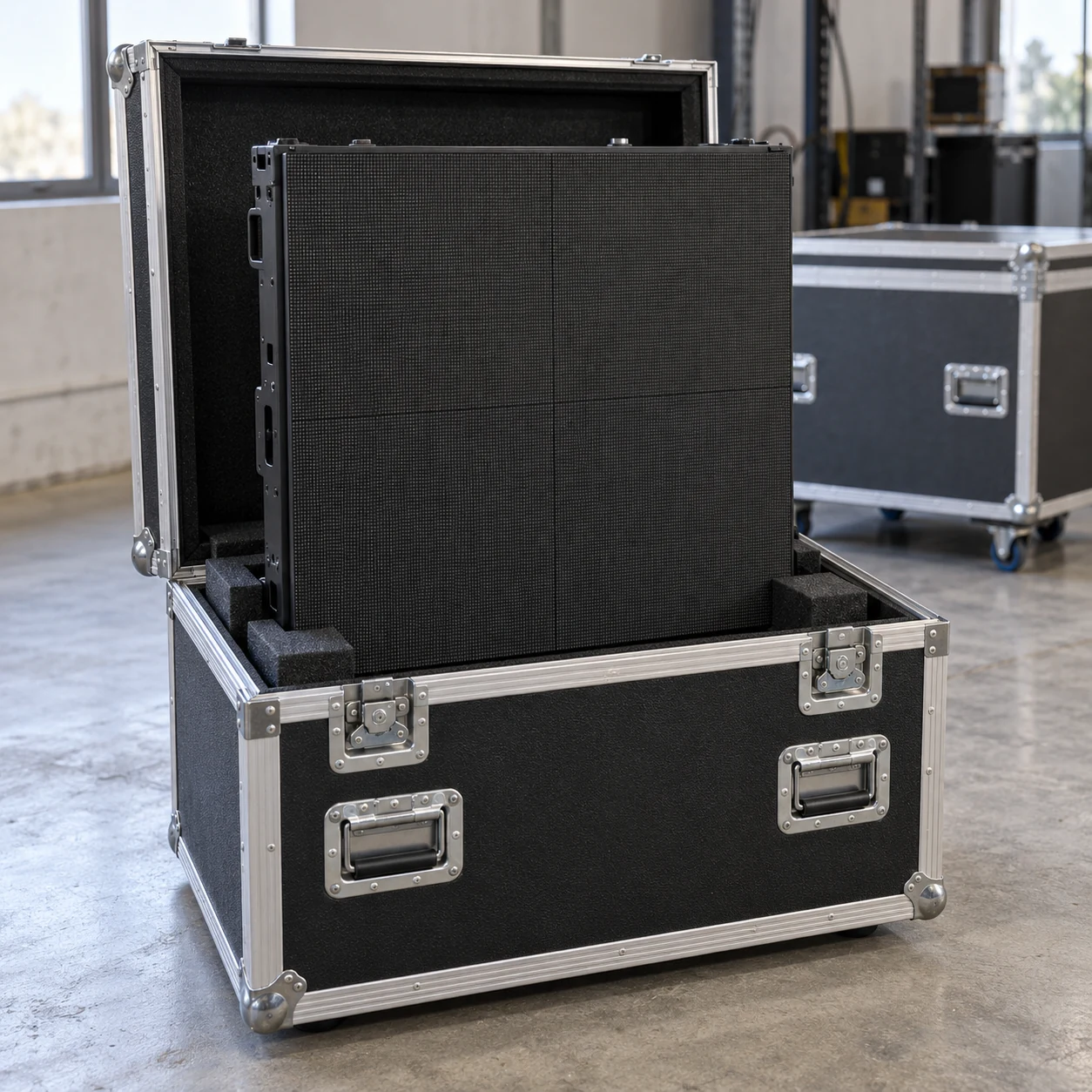
Plan a suitable location between delivery and installation. Confirm the manufacturer’s handling and packaging instructions with the supplier before choosing when to open cases or protective wrapping. Neither “open everything immediately” nor “leave everything sealed until the event” is a universal condensation-control procedure.
The staging area should allow the specified checks and safe handling without exposing equipment to uncontrolled weather, construction activity or accidental startup. Keep transported items identifiable so the inspection record belongs to the cabinets and accessories actually released. Do not move the approved batch into a materially different environment and assume the earlier check still covers it.
Capture delivery time, the known storage or transport conditions, the destination conditions and any observed packaging damage or moisture. Record unknowns as unknowns. Ask the logistics provider for relevant history where available, but do not invent a continuous temperature log from one reading taken at arrival.
Use the shipping, packing and inspection plan to separate transit damage and water exposure from a temperature-transition concern. Wet packaging needs investigation; equally, intact packaging is not proof that every environmental startup requirement has been met.
Agree who owns the staging hold and who can release it. This may involve the rental team, installer, supplier and site operator. A delivery signature normally records receipt; it should not be treated as technical approval to energize equipment unless that responsibility is explicitly included in the process.
Use measurements to support a readiness decision
Ask the integrator to define a suitable measurement and inspection method for the exact equipment. Relevant information can include local air temperature and relative humidity, a supported dew point measurement or calculation, and temperatures at the locations identified by the equipment supplier. Specify where and when readings will be taken.
The measurement plan should address instrument suitability, uncertainty and access limitations. A reading close to a decision boundary should not be treated as conclusive simply because a display shows a precise number. Have the responsible specialist define any required margin and the acceptance criteria; this guide does not prescribe a universal temperature difference.
Use repeat observations where the approved procedure requires them. Record whether conditions are stable, changing or not yet understood, and retain the relevant timestamps. The room reading and a measurement at the equipment should be clearly labeled so the next operator can see what each value represents.
Keep the limits of monitoring explicit. A room sensor or a controller’s internal temperature channel may provide useful information without proving that every connector, surface and enclosed component is free of moisture. Ask which locations the channel represents and what further checks are required. Do not turn an available dashboard value into a safety certification.
Make startup release a documented hold point
Define the release requirements before equipment arrives. The record should identify the product configuration, applicable manufacturer instructions, environmental evidence, inspection outcome and authorized person. This makes the decision reviewable when setup time is tight or several teams are working on the same installation.
The following table is a handover framework, not a set of measured results or permission to operate outside product limits. Complete the acceptance criteria with the supplier and responsible installer.
On smaller screens, swipe horizontally to view all columns.
| Hold-point check | Evidence to retain | Question before release |
|---|---|---|
| Equipment and documents | Model identifiers and applicable instruction revision | Are the checks specific to this configuration? |
| Transport-to-site transition | Known history, arrival time and local conditions | Is an environmental adaptation procedure required? |
| Packaging and moisture concern | Inspection record and relevant photographs | Does any finding require supplier assessment? |
| Required conditioning | Procedure reference, completion record and observations | Have all stated conditions and timing requirements been met? |
| Authorized startup | Named approver and recorded exceptions | Is normal operation released, or is the hold still active? |
Once the hold is released, use the normal LED display startup and shutdown plan for the agreed operating sequence. Condensation readiness and routine startup are related but separate checks. A successful boot or an image appearing on the wall does not retrospectively prove that the pre-start conditions were suitable.
Record any exclusions. If the supplier needs to assess an affected cabinet, identify that item and keep its status separate from the accepted batch. Do not allow an unresolved item to become “passed” merely because other cabinets completed their checks.
If moisture is suspected, stop the normal-startup decision
Escalate visible moisture, water exposure or an unexplained environmental condition to the responsible supplier and qualified installer. Prevent an accidental normal startup using the approved site procedure. Electrical isolation, access to covers and internal inspection must follow the equipment instructions and be handled by qualified personnel where required; do not investigate live parts.
The TB50 document also instructs users to prevent water intrusion and not wet or wash that player. More broadly, obtain the exact device’s approved assessment and recovery method. Wiping an accessible surface does not, by itself, establish that internal components are ready. Do not improvise with heat guns, hair dryers, solvents or unapproved changes to protective functions.
If the manufacturer specifies a moisture-conditioning or recovery procedure, treat it as a controlled process for the exact product. It is not an invitation to run ordinary campaign content at high brightness to dry equipment. Confirm the model, prerequisites, operator qualifications and completion criteria with the manufacturer before proceeding.
Preserve the history, observations and affected-unit identifiers for diagnosis. Do not repeatedly power-cycle an unresolved item to see whether it “gets better.” After the supplier’s approved recovery or assessment, complete the required release checks again and record the outcome rather than assuming the initial hold has expired.
Consider installed screens and their surrounding environment too
Cold-to-warm changes are not limited to delivery day. Review installations where cold airflow, shutdown periods or a rapid arrival of warmer humid air can change the conditions around equipment. The same condensation mechanism can become relevant, but the assessment must use the actual installation rather than a generic seasonal calendar.
Ask the site facilities team and integrator to review air paths, enclosure conditions and operating changes together. Do not block vents or alter cooling to address a moisture concern without an approved design review. The thermal management and ventilation guide helps organize the cooling discussion; temperature control and moisture control should not be treated as interchangeable promises.
Where monitoring is part of the project, define which observations trigger investigation and who responds. Use the remote monitoring response plan to distinguish a reported condition from an authorized recovery action. A remote operator should not override a local startup hold simply because the player still appears online.
Revisit the plan after changes to HVAC, enclosure layout, transport arrangements or operating patterns. A commissioning record supports the conditions and configuration actually assessed. It does not automatically approve every later storage location, shutdown duration or venue transfer.
Questions buyers ask about condensation and startup
How long should an LED display wait after a cold delivery?
Follow the exact manufacturer’s adaptation and startup procedure, including any stated minimum period and condition checks. There is no single waiting time that this guide can safely assign to every cabinet, packaging arrangement and environment. Obtain clarification before scheduling startup if the supplied instructions do not cover the expected transition.
Does an outdoor-rated cabinet eliminate the need for this check?
No automatic waiver follows from that description. Confirm the cabinet’s environmental and startup instructions, the condition of its interfaces, and the separate requirements of players, controllers and power equipment. Ask the supplier for configuration-specific evidence rather than treating the outdoor label as proof of immediate readiness after transport.
Can bright white content be used to dry the modules?
Do not invent a drying sequence from a normal playback setting. Only use a manufacturer-approved conditioning procedure that applies to the exact product and circumstances, with its prerequisites and completion checks. If moisture is suspected and no applicable procedure is available, keep normal startup on hold and request supplier assessment.
Include condensation readiness in the project scope
LED display condensation planning is a handover issue as well as an environmental one. Specify the expected transitions, applicable limits, staging process, assessment method and release authority. Give the setup schedule room for the manufacturer’s requirements, and keep any moisture recovery separate from ordinary operation.
For a KSS Display project discussion, provide the application, cabinet and control-system models, transport and storage conditions, destination environment, installation schedule, enclosure or HVAC arrangement and service-access constraints. Send your LED display project requirements so the equipment scope and startup responsibilities can be reviewed together. Confirm final adaptation and recovery procedures with the selected equipment supplier and responsible installer.